Circuit Breaker Buyers for New, Used, and Surplus Electrical Equipment
Call (281) 501-3405 | Industrial Surplus Inc.
Finding dependable Circuit Breaker Buyers can make a significant difference when your business has electrical equipment that is no longer needed. Whether you are clearing warehouse shelves, replacing equipment during a facility upgrade, or managing inventory left over from a completed project, identifying a potential buyer is an important step toward recovering value from those assets.
Industrial Surplus Inc. welcomes inquiries from businesses interested in selling surplus circuit breakers and related industrial electrical equipment. Our goal is to help sellers present their inventory clearly, understand the information needed for an evaluation, and explore purchasing opportunities based on the equipment available.
Electrical components can remain in storage for years because their owners are unsure whether the equipment still has commercial value. Some breakers may be suitable for resale, while others may have limited demand because of age, condition, missing components, or changes in electrical technology. Instead of assuming your inventory is worthless, contact our team to discuss what you have.
Call (281) 501-3405 or use our online contact page to begin an inventory review.
What Do Circuit Breaker Buyers Look for When Purchasing Equipment?
Professional circuit breaker buyers typically evaluate more than the number of units available. The manufacturer, model, electrical specifications, physical condition, and potential demand for replacement equipment can all influence whether a particular breaker is attractive to purchase.
A circuit breaker is designed to interrupt electrical current when an overload or fault occurs. Because these devices serve an important protective function, identifying the correct equipment and its specifications matters throughout the resale process. For additional background on the technology, see circuit breakers.
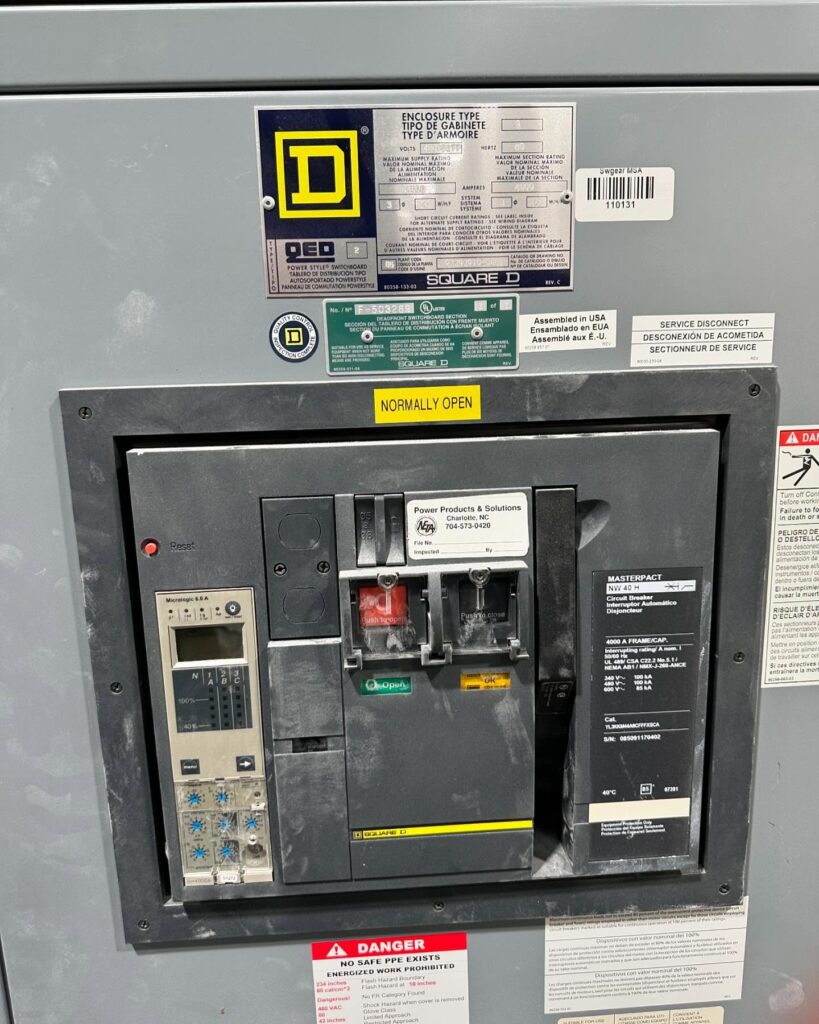
For sellers, the most useful starting point is an accurate description of the inventory. A clear photograph of a nameplate can often communicate more than a general description such as “large industrial breaker” or “old electrical switch.”
Important Details That Help Buyers Evaluate Circuit Breakers
- Manufacturer: The original equipment brand and any identifiable product series.
- Catalog or Model Number: The specific number printed on the equipment or its identification label.
- Voltage Rating: The voltage specifications shown on the manufacturer’s label.
- Current Rating: The amperage rating and any applicable trip-unit information.
- Interrupting Rating: The available fault-current interruption rating, when identified.
- Physical Condition: Whether the equipment appears complete, damaged, corroded, or modified.
- Quantity: The number of identical units and any additional mixed inventory.
- Documentation: Available maintenance records, test reports, packaging, and product information.
Providing these details helps reduce unnecessary questions and allows a prospective buyer to make a more informed assessment of the equipment.
Types of Circuit Breakers That May Interest Industrial Buyers
Industrial and commercial electrical systems use several different circuit breaker designs. Each type serves particular applications, and the potential resale market can vary considerably between models.
Molded Case Circuit Breakers
Molded case circuit breakers, commonly called MCCBs, are widely used in commercial and industrial electrical distribution systems. They are available in numerous frame sizes, current ratings, and trip configurations. Their resale potential often depends on the exact model, manufacturer, condition, and availability of compatible replacement units.
Air Circuit Breakers
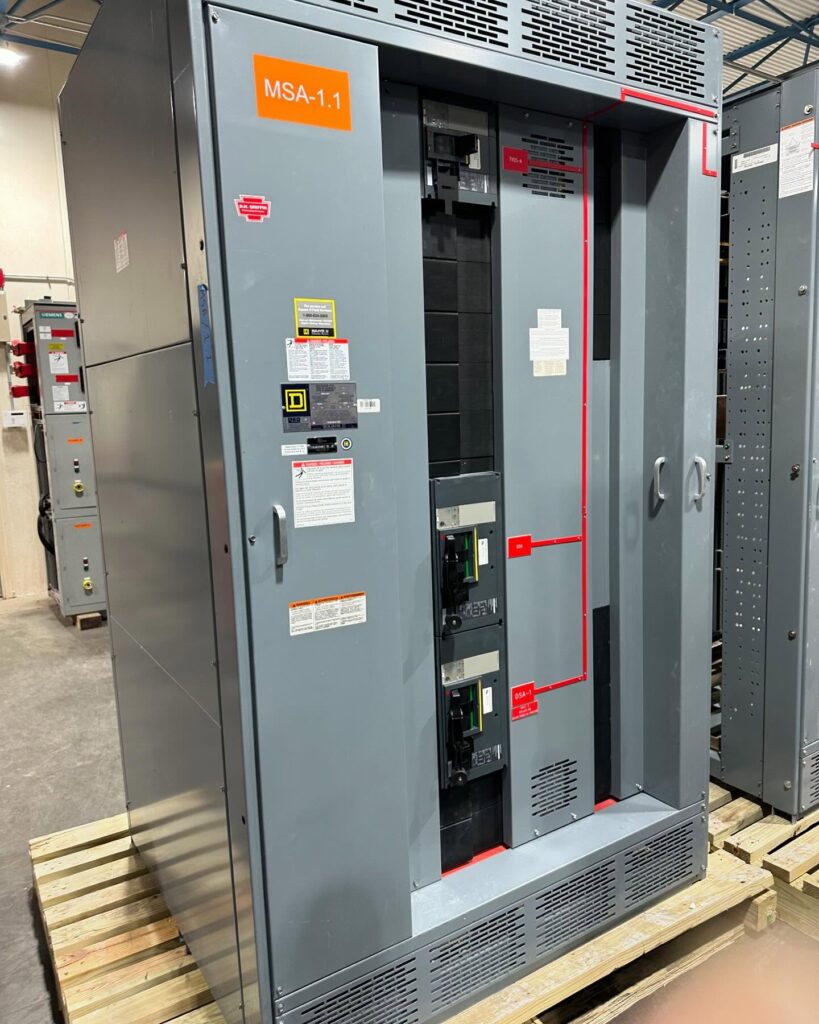
Air circuit breakers are commonly associated with larger low-voltage distribution systems and industrial switchgear. These units may include specialized operating mechanisms, electronic trip systems, and removable assemblies. Sellers should document the complete breaker configuration and any accompanying components.
Vacuum Circuit Breakers
Vacuum circuit breakers are used in various medium-voltage applications. Their construction and operating characteristics differ from those of smaller molded case devices. Identification plates, equipment history, and supporting technical records can be particularly helpful when evaluating these units.
Insulated-Case Circuit Breakers
Insulated-case breakers are found in certain commercial and industrial power distribution applications. Depending on the design, they may incorporate adjustable trip functions and serviceable components. Buyers may need detailed model information to determine compatibility and demand.
Low-Voltage and Medium-Voltage Circuit Breakers
Low-voltage and medium-voltage equipment covers a broad range of industrial applications. The terminology alone is not enough to establish purchasing interest. The manufacturer, voltage class, current rating, and equipment configuration help distinguish one breaker from another.
Obsolete and Discontinued Circuit Breakers
Discontinued electrical equipment deserves individual consideration. Certain older models may remain useful to organizations maintaining existing installations, while others may have little resale demand. Obsolete does not automatically mean valuable, and older equipment should never be assumed safe for reuse without appropriate inspection and evaluation.
Can You Sell Used Circuit Breakers?
Used circuit breakers may have resale potential, but their condition and history are important. Equipment removed during a planned electrical upgrade is different from a breaker removed because it failed, overheated, or experienced a significant electrical fault.
When contacting circuit breaker buyers, explain why the equipment became available. Was it replaced during a modernization project? Was it removed from an operational facility? Has it been sitting in storage? Was it ever installed?
These distinctions help a prospective buyer understand the inventory and determine whether further evaluation is appropriate.
Do not represent used equipment as tested, refurbished, or ready for installation unless the necessary inspection and testing have actually been performed. Any future installation or reuse should be evaluated by qualified electrical professionals under applicable requirements.
Who Typically Sells Equipment to Circuit Breaker Buyers?
Surplus electrical inventory comes from many different industries. Some sellers have a handful of unused breakers remaining after construction, while others manage substantial quantities of equipment recovered during facility changes.
- Electrical Contractors: Unused project materials, replacement components, and equipment removed during upgrades.
- Industrial Facilities: Surplus electrical assets resulting from production changes or modernization projects.
- Electrical Supply Distributors: Excess inventory, discontinued stock, and slow-moving product lines.
- Manufacturing Companies: Spare breakers and electrical components associated with machinery or facility operations.
- Commercial Property Owners: Electrical equipment made available during renovations and building improvements.
- Equipment Resellers: Mixed lots of industrial electrical components requiring additional purchasing outlets.
- Maintenance Departments: Spare parts and replacement units that are no longer compatible with current systems.
- Asset Liquidation Companies: Electrical equipment included in broader industrial inventory sales.
Each situation presents different considerations involving ownership, condition, quantity, documentation, and transportation. A detailed inventory makes it easier to discuss the available options.
Speak With Circuit Breaker Buyers About Your Surplus Inventory
Call (281) 501-3405 | Industrial Surplus Inc.
How Much Are Surplus Circuit Breakers Worth?
There is no universal purchase price for used or surplus circuit breakers. Two breakers that look similar may have very different market values because of their electrical ratings, internal components, manufacturer, and compatibility with existing installations.
Pricing is also affected by supply and demand. A particular breaker may be difficult to obtain as a replacement component, while another model may be widely available from multiple suppliers. Even equipment from a recognized manufacturer does not automatically command a strong resale price.
Factors That Can Influence a Circuit Breaker Offer
- Brand and Model: Demand may differ substantially between manufacturers and individual product lines.
- Condition: New surplus, unused open-box, previously installed, and visibly damaged equipment may be evaluated differently.
- Completeness: Missing trip units, terminals, accessories, or mounting components may reduce purchasing interest.
- Quantity: A consistent group of matching breakers may be easier to evaluate than a large mixed lot.
- Documentation: Maintenance records, testing information, and original packaging may help clarify the equipment’s history.
- Market Availability: Existing supply and replacement demand can affect potential resale value.
- Transportation Requirements: Equipment size, location, packaging, and handling needs may affect the economics of a transaction.
For a more useful evaluation, organize your inventory by manufacturer and model instead of submitting only a total piece count. This allows potential buyers to identify the individual components that may warrant closer consideration.
New Surplus, Used, and Obsolete Circuit Breakers: Understanding the Difference
Not all surplus equipment belongs in the same category. Accurately describing what you are selling can help avoid misunderstandings and support a smoother purchasing discussion.
New Surplus Circuit Breakers
New surplus inventory generally refers to equipment that has not been installed but is no longer needed by its current owner. This may include unused project materials, excess distributor stock, or spare equipment purchased for a facility that later changed its electrical design.
Original packaging, labels, and complete accessories can make this inventory easier to identify. However, storage conditions and age still matter, even when an item has never been installed.
Used Circuit Breakers
Used breakers have previously been installed or operated. Their potential resale value depends on the specific equipment, its history, physical condition, and any available testing documentation.
Visible appearance alone cannot establish whether a used breaker will operate correctly. Sellers should disclose known faults, unusual operating history, modifications, and missing parts.
Obsolete Circuit Breakers
Obsolete breakers are models that may no longer be manufactured or commonly specified for new installations. Some may still have a replacement market, particularly where existing systems require compatible equipment.
Other discontinued products may be unsuitable for reuse or have limited demand. Purchasing interest should be established individually rather than assumed based on age.
What Circuit Breaker Brands Should You Identify?
Manufacturers and product families are among the first details prospective buyers review. Industrial facilities often maintain equipment from multiple brands, particularly when electrical systems have been expanded over many years.
Common names encountered in industrial electrical inventories include:
- Square D and Schneider Electric
- Siemens
- Eaton and Cutler-Hammer
- General Electric and GE-related legacy equipment
- ABB
- Westinghouse
- Federal Pacific
- Other legacy and specialized industrial manufacturers
This list is provided to help sellers identify their equipment; it does not establish that every model or brand will be purchased. Brand recognition alone is not sufficient to determine whether a breaker is desirable, compatible, or suitable for resale.
If your inventory contains multiple brands, separate the equipment into groups and photograph the identification labels. A clearly organized list makes it easier to determine which items may be of interest.
How to Prepare Your Inventory Before Contacting Circuit Breaker Buyers
A little preparation can improve the quality of a purchasing inquiry. You do not need an elaborate inventory management system, but you should gather enough information for someone unfamiliar with your equipment to understand what is available.
1. Identify the Equipment
Record the manufacturer, model number, electrical ratings, and quantity. If the nameplate is difficult to read, take several photographs from different angles rather than guessing at the specifications.
2. Separate Similar Units
Group matching breakers together whenever practical. Distinguish new surplus inventory from used equipment, and keep visibly damaged units separate from items with no known defects.
3. Photograph the Breakers
Take clear photographs of the front, rear, terminals, identification labels, and any relevant accessories. For larger equipment, include an overall image that shows its size and configuration.
4. Describe the Equipment History
Explain whether the breakers came from a warehouse, construction project, operational facility, or decommissioned installation. Mention any known faults, prior repairs, or testing records.
5. Confirm Ownership and Availability
Make sure the equipment is authorized for sale and that any required internal approvals have been obtained. If it remains installed, do not disconnect or handle energized equipment for the purpose of preparing a sales inquiry.
6. Explain the Storage and Transportation Situation
Indicate whether the breakers are boxed, palletized, stored on shelves, or still part of larger assemblies. Include the general location and note whether specialized handling would be required.
These details allow the purchasing discussion to focus on the actual inventory instead of spending time resolving basic identification questions.
Can You Sell Circuit Breakers Along With Other Industrial Surplus?
Electrical breakers are frequently stored alongside other components from the same project or facility. Rather than approaching every item separately, it may be useful to describe the complete group of available equipment.
Related inventory can include electrical enclosures, switchgear components, control equipment, replacement parts, and other industrial materials. Purchasing interest depends on the individual items and their specifications.
Industrial Surplus Inc. provides information about its broader offerings on the services page. You can also explore the industrial equipment store for additional context about the types of products associated with the business.
When submitting a mixed inventory, distinguish the circuit breakers from unrelated materials. Include separate counts and photographs so each category can be considered appropriately.
Common Mistakes to Avoid When Selling Surplus Circuit Breakers
Sellers sometimes delay a transaction because they lack accurate inventory details or make assumptions about the equipment’s condition. Avoiding a few common mistakes can make the process more efficient.
- Using Incomplete Descriptions: Terms such as “electrical breaker” are too broad without a manufacturer and model number.
- Assuming All Old Equipment Is Valuable: Discontinued products can have widely different levels of demand.
- Mixing Working and Damaged Equipment: Known defects should be identified instead of combining all units under one condition description.
- Discarding Identification Labels: Nameplates and catalog information are often essential for evaluation.
- Claiming Equipment Has Been Tested Without Records: Testing and refurbishment claims should be supported by actual documentation.
- Overlooking Missing Accessories: Trip units, connectors, handles, and mounting hardware may affect completeness.
- Ignoring Transportation Costs: Large electrical equipment may require packaging, lifting equipment, or freight arrangements.
- Assuming Pickup or Payment Terms: Confirm logistics, costs, and payment arrangements before accepting a transaction.
A straightforward description of what you have is generally more useful than an exaggerated assessment of its condition or resale value.
Understanding Pickup, Shipping, and Payment Arrangements
When working with circuit breaker buyers, transaction details should be clarified before equipment changes hands. Purchasing arrangements can vary depending on the size of the inventory, the seller’s location, and the condition of the equipment.
Pickup and Freight
Small quantities of circuit breakers may be suitable for conventional shipping, while heavier industrial units can require pallets, freight services, or specialized handling. Ask whether pickup is available for your inventory and whether transportation costs are included in the proposed terms.
Equipment Removal
If equipment is still installed in an electrical system, removal is a separate safety consideration. De-energization, isolation, and disconnection must be handled by appropriately qualified personnel. Do not assume that an equipment purchase includes electrical dismantling or on-site removal services.
Payment Terms
Before agreeing to a sale, confirm the purchase amount, accepted payment method, payment timing, and any conditions related to inspection or receipt of the equipment. Written terms help both parties understand their responsibilities.
Documentation
For commercial transactions, retain records describing the equipment sold, agreed pricing, and transfer of ownership. If your organization requires additional documentation, ask about its availability before completing the transaction.
Find Out Whether Your Circuit Breakers Have Resale Potential
Call (281) 501-3405 | Industrial Surplus Inc.
Our Five-Step Process for Circuit Breaker Selling Inquiries
Knowing what to expect makes it easier to begin a conversation with prospective buyers. The following steps outline a practical approach to submitting equipment for consideration.
- Contact Industrial Surplus Inc.: Call (281) 501-3405 or visit the contact page to describe your inventory.
- Provide Equipment Information: Share model numbers, manufacturers, quantities, photographs, and any available documentation.
- Discuss Purchasing Interest: Allow the team to review the information and determine whether the equipment may be suitable for further consideration.
- Clarify the Proposed Terms: If purchasing interest is established, discuss pricing, inspection requirements, transportation, and payment arrangements.
- Complete an Agreed Transaction: If both parties accept the terms, coordinate the transfer of equipment and retain the appropriate transaction records.
Not every inventory submission will result in a purchase offer. Providing complete and accurate information is the best way to support an efficient review.
Why Contact Industrial Surplus Inc. About Circuit Breakers?
Industrial Surplus Inc. offers a direct point of contact for businesses exploring options for surplus electrical equipment. Rather than making assumptions about whether your breakers have value, you can submit the details for consideration.
For organizations managing industrial inventory, the main benefit of contacting a potential buyer is obtaining information about purchasing interest before deciding what to do with the equipment.
You can learn more about the company through the About Us page, explore available information on the Industrial Surplus World homepage, or visit the Sell to Us page to begin discussing surplus assets.
Request an Evaluation From Circuit Breaker Buyers
If your business has circuit breakers that are no longer needed, start by gathering the available equipment information. Whether you have unused replacement units, breakers removed during an upgrade, or a mixed inventory of industrial electrical components, clear documentation is the foundation of a productive purchasing discussion.
Industrial Surplus Inc. can be contacted to discuss your inventory and determine the next appropriate steps. Include photographs, manufacturer details, quantities, condition information, and your general location when making an inquiry.
Call (281) 501-3405 or contact Industrial Surplus Inc. online to speak with the team about your surplus circuit breakers.
Frequently Asked Questions About Circuit Breaker Buyers
What Do Circuit Breaker Buyers Do?
Circuit breaker buyers evaluate electrical breakers offered for sale and determine whether particular models, quantities, and conditions are suitable for purchase. Their interest depends on the equipment and potential resale demand.
Can I Sell Circuit Breakers That Have Never Been Installed?
Yes, unused circuit breakers can be submitted for purchasing consideration. Provide the model numbers, quantities, packaging condition, and any information about how the equipment has been stored.
Are Used Circuit Breakers Worth Money?
Some used circuit breakers retain resale value, but not every model has an active market. Manufacturer, condition, specifications, completeness, and demand all influence purchasing interest.
Do Circuit Breaker Buyers Purchase Obsolete Models?
Certain obsolete models may interest buyers seeking compatible replacement equipment. Others may have limited demand. The exact manufacturer and catalog number are necessary for a meaningful assessment.
What Types of Circuit Breakers Can I Submit?
You can inquire about molded case, air, vacuum, insulated-case, low-voltage, medium-voltage, and other industrial circuit breakers. Acceptance depends on the specific equipment.
What Information Should I Provide to Receive an Evaluation?
Provide the manufacturer, model number, electrical ratings, quantity, condition, photographs, and any available maintenance or testing documentation.
Can I Sell a Large Quantity of Circuit Breakers?
Bulk inventories can be submitted for review. Organizing units by manufacturer, model, and condition will make the information easier to assess.
Can I Sell Just One Circuit Breaker?
You can submit an inquiry for a single breaker. Whether an individual unit is of purchasing interest depends on its specifications, condition, and potential value.
Do You Buy Damaged Circuit Breakers?
Contact Industrial Surplus Inc. with photographs and a description of the damage. Purchasing interest in damaged equipment must be determined individually and should not be assumed.
How Do I Find the Model Number on a Circuit Breaker?
Look for a manufacturer’s identification label, catalog number, or nameplate on the breaker housing. If the marking is difficult to read, submit a clear photograph rather than guessing.
Which Circuit Breaker Brands Are Common in Industrial Inventories?
Common manufacturers include Square D, Siemens, Eaton, Cutler-Hammer, General Electric, ABB, and several legacy brands. Individual models must still be evaluated separately.
Can I Sell Breaker Panels or Switchgear Components?
You can include related electrical equipment in your inquiry. Describe each item separately because purchasing interest may differ between breakers, complete assemblies, and individual components.
How Is the Value of a Circuit Breaker Determined?
Potential value depends on the exact model, manufacturer, electrical ratings, physical condition, completeness, documentation, and market demand. Transportation requirements may also influence the proposed terms.
Will You Arrange Pickup of My Circuit Breakers?
Ask about available transportation or pickup arrangements when submitting your inventory. Options and costs should be confirmed for the specific equipment and location.
Do You Remove Circuit Breakers From Installed Electrical Systems?
Do not assume electrical disconnection or removal is included in a purchase. Any installed equipment must be handled by appropriately qualified personnel, and service responsibilities should be clarified in advance.
How Quickly Can I Receive a Purchase Offer?
The review time can depend on the amount of equipment, quality of the information provided, and whether additional details are required. Contact the team to discuss your specific inventory.
What Payment Methods Are Available?
Payment arrangements should be confirmed as part of the proposed transaction. Ask about the available methods and timing before accepting an offer.
Can I Sell Circuit Breakers From a Business Closure?
Yes, equipment from a closed or downsized business can be submitted for review, provided the seller has authority to sell the assets. Include a clear inventory and relevant ownership information.
Should I Test My Circuit Breakers Before Selling Them?
Provide any existing testing records, but do not attempt unsafe electrical testing. Testing should be performed only by appropriately qualified personnel using suitable procedures and equipment.
How Do I Contact Industrial Surplus Inc. About Selling Circuit Breakers?
Call (281) 501-3405, visit the Sell to Us page, or submit your information through the contact form. Include photographs and model details to help begin the evaluation.